
Back pain affects millions worldwide, and many people now use heating therapy for back pain as relief. Studies show that nearly 75%-80% of adults experience back pain at some point in their lives. Heat therapy for back pain works by relaxing muscles, improving circulation, and easing daily discomfort naturally.
Many people prefer heating pads for back pain because they are simple, affordable, and easy to use. Understanding the benefits of heat therapy for lower back pain can help you manage pain safely. In this article, we will explain how heat therapy for back pain works, how to use and can provide faster relief and support recovery. Let’s dive in.
What Is Heating Therapy for Back Pain?
Heating therapy for back pain is a simple method that uses warmth to reduce pain and relax muscles. Heat therapy for back pain works by increasing blood flow to the affected area, which supports healing.
It helps loosen tight muscles, reduce stiffness, and improve movement in the lower back. Common options include heating pads for back pain, warm baths, and heat therapy pads. This method is often used for chronic pain, muscle tension, and everyday back discomfort.
How Heat Therapy Works to Relieve Back Pain
Heat therapy for back pain works by increasing blood flow to the affected muscles and tissues. This improved circulation delivers more oxygen and nutrients, which helps the body heal faster. It also relaxes tight muscles and reduces stiffness, making movement easier and less painful.
Warmth can block pain signals sent to the brain, which lowers the feeling of discomfort. Many people use heating pads for back pain to improve flexibility and support daily activities with less strain.
Benefits of Heat Therapy for Lower Back Pain
Heat therapy for lower back pain relaxes muscles and reduces stiffness. Using a heat therapy pad for back pain can help you move better. It provides natural relief and supports daily activities.
Relieves Muscle Tension and Spasms
Heat increases blood flow to muscles. This relaxes tight muscles and reduces spasms. Using heating pads for back pain can make movement easier. Regular use helps prevent stiffness and supports healthy muscles.
Reduces Stiffness and Improves Flexibility
Applying heat loosens tissues and reduces stiffness. This improves flexibility in the lower back. Heat therapy is useful before activity or after sitting. It helps you move comfortably without pain.
Supports Healing and Tissue Repair
Heat improves circulation and delivers nutrients to muscles. This supports tissue repair and recovery. A heat therapy pad for back pain helps minor strains heal naturally and safely.
Provides Natural, Drug-Free Pain Relief
Heat therapy eases pain without medication. Heating pads for back pain give safe, natural relief. It helps manage chronic and acute pain.
Types of Heat Therapy for Back Pain
There are several ways to use heat therapy for back pain. Each method gives warmth and helps relax muscles. Choosing the right type can improve comfort and provide effective relief.
Heating Pads for Back Pain
Electric heating pads give steady, direct heat to the lower back. They have adjustable settings and auto-shutoff for safety. Microwaveable pads are cord-free and easy to use. Both types help reduce stiffness and relax tight muscles. Using them regularly can improve mobility and provide fast, convenient pain relief.
Heat Wraps and Gel Packs
Heat wraps stick to your lower back and provide long-lasting warmth. Gel packs can be microwaved and applied for 20–30 minutes. Both are portable and easy to use. They help loosen tight muscles, reduce stiffness, and relieve chronic or acute back pain naturally without medication.
Hot Baths and Warm Water Therapy
Warm baths or hot tubs use moist heat to relax deep muscles. Soaking helps relieve stiffness and tension in the lower back. The water supports your body while heat penetrates muscles. This method is simple, safe, and effective. It can be used daily to improve flexibility and reduce pain.
Infrared and Deep Heat Methods
Infrared heat pads use far-infrared rays to reach deep tissues. They provide warmth without overheating the skin. Deep heat helps relax tight muscles and reduce chronic pain. These pads are suitable for long-term use and can improve flexibility. They offer a modern, effective alternative to traditional heating pads.
How to Use Heat Therapy for Back Pain Safely
Heat therapy for back pain is effective only when used correctly. Proper use prevents burns and irritation while providing maximum relief. Following simple safety steps ensures warmth relaxes muscles, improves circulation, and reduces stiffness without causing harm or increasing inflammation.
Step 1: Choose the Right Heat Source
Select a heat therapy pad for back pain that suits your needs. Electric pads allow adjustable warmth, while microwaveable pads are portable and cord-free. Ensure the pad is in good condition and follow the manufacturer’s instructions. Choosing the right heat source prevents burns and gives effective, consistent relief.
Step 2: Use a Barrier Between Skin and Pad
Always place a thin cloth between the heating pad for sore back and your skin. Direct contact may cause burns or irritation. A barrier ensures safe warmth reaches muscles while protecting sensitive skin. This method allows heat to relax muscles and ease stiffness safely during every session.
Step 3: Limit Session Duration
Use heat therapy for 15–30 minutes per session. Longer use can damage skin or increase discomfort. Short, consistent sessions are most effective for muscle relaxation and pain relief. Set a timer or use an auto-shutoff heating pad to ensure safe, controlled use each time.
Step 4: Avoid Heat on New Injuries or Swelling
Do not apply heat to recently injured or inflamed areas. Heat can worsen swelling and increase pain. For new injuries, cold therapy is safer. Heat therapy for back pain is most effective for chronic stiffness, tight muscles, or ongoing discomfort, rather than for fresh injuries.
Step 5: Monitor Your Body’s Response
Pay attention to any redness, irritation, or discomfort while using heat. Stop immediately if skin feels too hot or sensitive. Regular monitoring prevents burns and ensures the therapy remains safe. Adjust the temperature, duration, or type of heat pad based on comfort and response.
When to Use Heat Therapy vs Cold Therapy
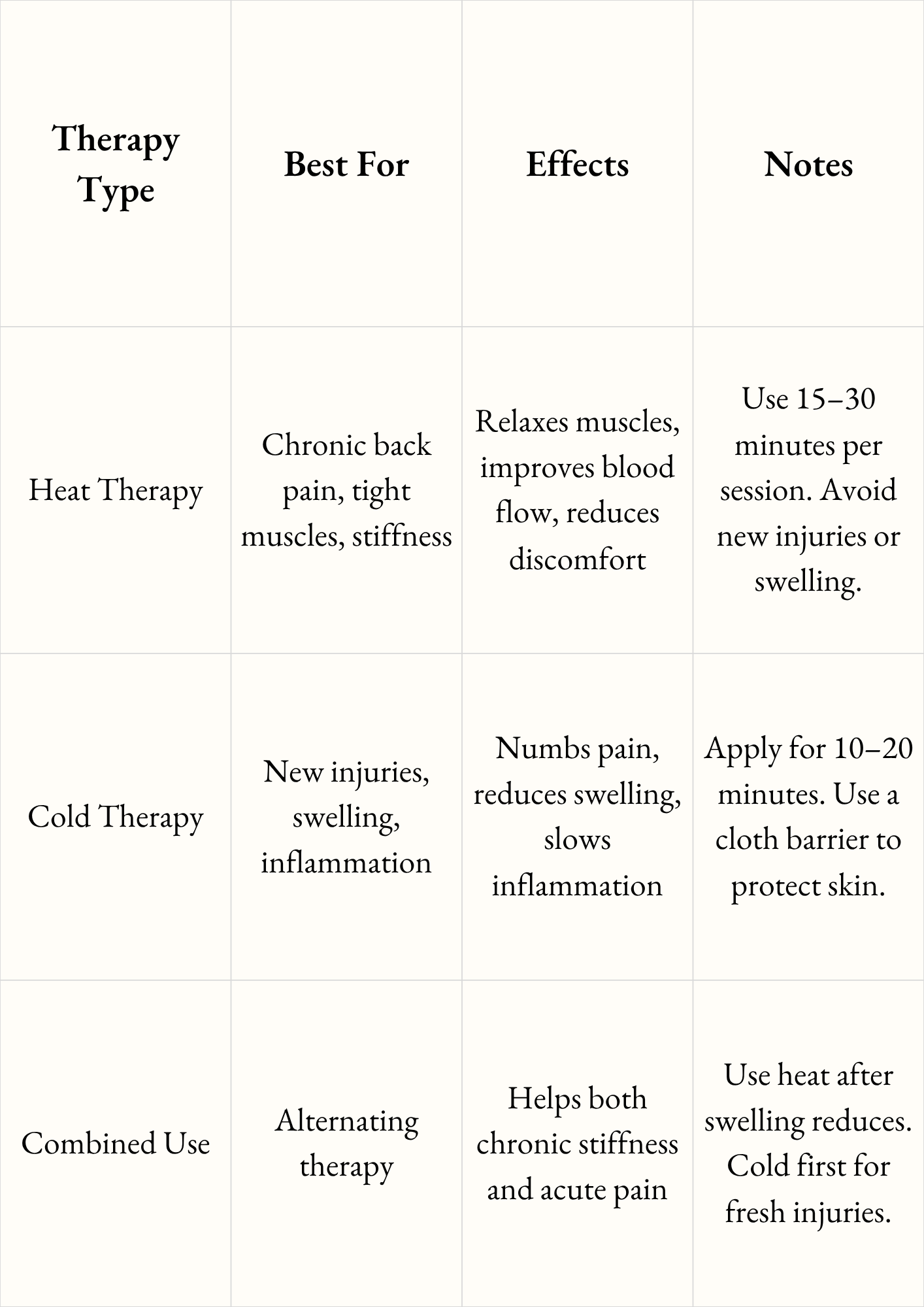
Heat and cold therapy work differently for back pain. Heat therapy for back pain relaxes muscles, reduces stiffness, and improves circulation. Cold therapy is best for new injuries or swelling. Applying ice can reduce inflammation and numb sharp pain. Heat is better for chronic pain or tight muscles. Cold helps with acute pain or post-injury swelling. Choosing the right therapy depends on your symptoms. Many people alternate heat and cold for maximum relief.
Risks and Side Effects of Heat Therapy
Heat therapy for back pain is generally safe but can cause problems if used incorrectly. Always follow the recommended duration and temperature. Be careful with sensitive skin or certain health conditions. Common risks include:
- Skin burns or irritation – Direct heat or prolonged use can damage skin.
- Increased inflammation – Applying heat to new injuries may worsen swelling.
- Dizziness or fainting – Excessive heat can lower blood pressure in some people.
- Overheating – Using heating pads for too long or at too high a temperature can cause discomfort.
Proper use prevents these risks and ensures safe, effective relief.
Who Should Avoid Heat Therapy for Back Pain
Not everyone should use heat therapy for back pain. Certain conditions can make it unsafe. Always check with a healthcare provider if unsure. People who should avoid heat therapy include:
- Open wounds or skin infections – Heat can worsen infection or slow healing.
- Poor circulation or nerve damage – Can cause burns or numbness without warning.
- Pregnant women – Use caution, especially on the abdomen or lower back.
- Certain medical conditions – Diabetes, heart disease, or skin disorders may increase risk.
Choosing safe alternatives or consulting a doctor ensures effective pain relief without harm.
FAQs
1. Is heat therapy good for back pain?
Yes. Heat therapy for back pain relaxes muscles, reduces stiffness, improves circulation, and eases chronic pain. Using heating pads for back pain provides natural, effective relief.
2. How long should I use a heating pad?
Use heat therapy for back pain for 15–30 minutes per session. Avoid longer use to prevent skin burns or irritation. Always follow instructions on your heat therapy pad.
3. Can I use heat therapy daily?
Yes. Daily use of a heat therapy pad for back pain is safe for chronic stiffness. Limit each session to the recommended time and monitor skin for irritation.
4. Is heat therapy good for lower back pain?
Yes, heat therapy is effective for lower back pain. It helps relax tight muscles, reduces stiffness, and improves blood circulation. Using a heat therapy pad for lower back pain provides natural relief and supports comfortable daily movement.
Conclusion
Heating therapy for back pain is a safe and effective way to relieve discomfort. It relaxes muscles, reduces stiffness, and improves circulation. Regular use of a heat therapy pad for back pain can enhance mobility, support recovery, and provide natural, drug-free relief. Proper use ensures maximum benefits without risks or irritation.