
Heat therapy for arthritis is a simple, non-invasive method many people use to relieve joint pain daily. Studies suggest that around arthritis patients experience reduced stiffness after regular heat therapy.
It works by increasing blood flow, relaxing muscles, and improving flexibility in stiff and painful joints. Many people also try heat therapy for rheumatoid arthritis to manage chronic discomfort and improve daily movement.
This method is easy to use at home and can complement other treatments without strong side effects. In this article, we will explore how heat therapy for arthritis works, its benefits, types, and safe ways to use it effectively. Let’s dive in.
How Heat Therapy Works for Arthritis Pain
Heat therapy for arthritis works by increasing blood flow to painful joints and surrounding tissues. When heat is applied, blood vessels expand, improving circulation and delivering oxygen and nutrients.
This process helps relax tight muscles and reduce joint stiffness, making movement easier and more comfortable. Heat also improves tissue flexibility and may reduce pain signals sent to the brain.
As a result, heat therapy for rheumatoid arthritis can ease chronic discomfort and support better joint function over time.
Benefits of Heat Therapy for Arthritis
Heat therapy is a simple and effective method for relieving arthritis pain, reducing stiffness, and improving joint flexibility. Regular use can make daily activities easier and support better overall comfort for people with chronic arthritis or rheumatoid arthritis. Benefits of heat therapy for Arthritis:
- Reduces joint stiffness and improves flexibility.
- Relieves muscle tension and spasms.
- Supports better mobility and range of motion.
- Helps manage chronic arthritis pain without strong medications.
- Promotes relaxation and reduces stress related to ongoing discomfort.
- Can complement other treatments for enhanced pain relief.
Heat Therapy for Rheumatoid Arthritis
Rheumatoid arthritis (RA) is an autoimmune condition that causes joint inflammation, pain, and stiffness. Heat therapy for rheumatoid arthritis can help ease these symptoms and improve daily function.
Applying gentle heat relaxes muscles, reduces joint stiffness, and increases blood flow, making movement easier. Many RA patients report temporary relief from discomfort and fatigue after using heat therapy regularly.
However, heat should be avoided on inflamed or swollen joints, as it can worsen irritation. Used correctly, heat therapy for rheumatoid arthritis is a safe and effective way to support joint comfort and improve quality of life.
Types of Heat Therapy for Arthritis
There are several types of heat therapy available for arthritis, each offering unique benefits:
Moist Heat Therapy
Moist heat therapy uses warm towels, steamed cloths, or hot baths. The heat penetrates deep into muscles and joints. It helps relax stiff muscles and eases joint tension. Moist heat improves flexibility and mobility. People often use it before exercise or daily activities. It provides fast and effective pain relief.
Dry Heat Therapy
Dry heat therapy includes heating pads, heat wraps, and electric blankets. It provides steady warmth to painful joints. Dry heat relaxes muscles and reduces stiffness. It improves blood flow and eases discomfort. This method is easy to use at home or work. It is convenient and effective for relieving arthritis pain.
Warm Water Therapy
Warm water therapy uses hot showers, baths, or hydrotherapy. Immersing joints in warm water relaxes muscles and reduces stiffness. It improves flexibility and mobility without straining joints. Many people with rheumatoid arthritis find it helpful. Warm water therapy also promotes relaxation. Regular use can make daily movement easier and less painful.
Advanced Heat Therapy
Advanced heat therapy includes infrared devices, saunas, and specialized heat tools. Infrared heat penetrates deep tissues to reduce pain. Saunas improve blood flow and relax muscles. These methods may help with rheumatoid arthritis symptoms. They can complement other heat therapies. Regular use supports joint comfort, flexibility, and overall arthritis management.
How to Use Heat Therapy for Arthritis Safely
Using heat therapy for arthritis safely is simple if you follow these steps carefully.
- Choose the right heating method – select a heating pad, warm towel, hot bath, or infrared device based on your comfort and the location of your joint.
- Check the temperature – Make sure it is warm, not hot, to avoid burns or irritation.
- Use a barrier – Place a thin cloth or towel between your skin and the heat source.
- Set a time limit – Apply heat for 15–20 minutes per session.
- Monitor your skin – Stop immediately if you notice redness, discomfort, or burning.
- Avoid inflamed joints – Do not use heat on swollen, red, or inflamed areas.
- Do not sleep with heat – Never fall asleep while using electric heating devices.
- Combine with gentle movement – After heat therapy, perform light exercises to improve flexibility and reduce stiffness.
Following these steps ensures effective relief while minimizing risks for patients with arthritis or rheumatoid arthritis.
When to Use Heat vs Cold Therapy
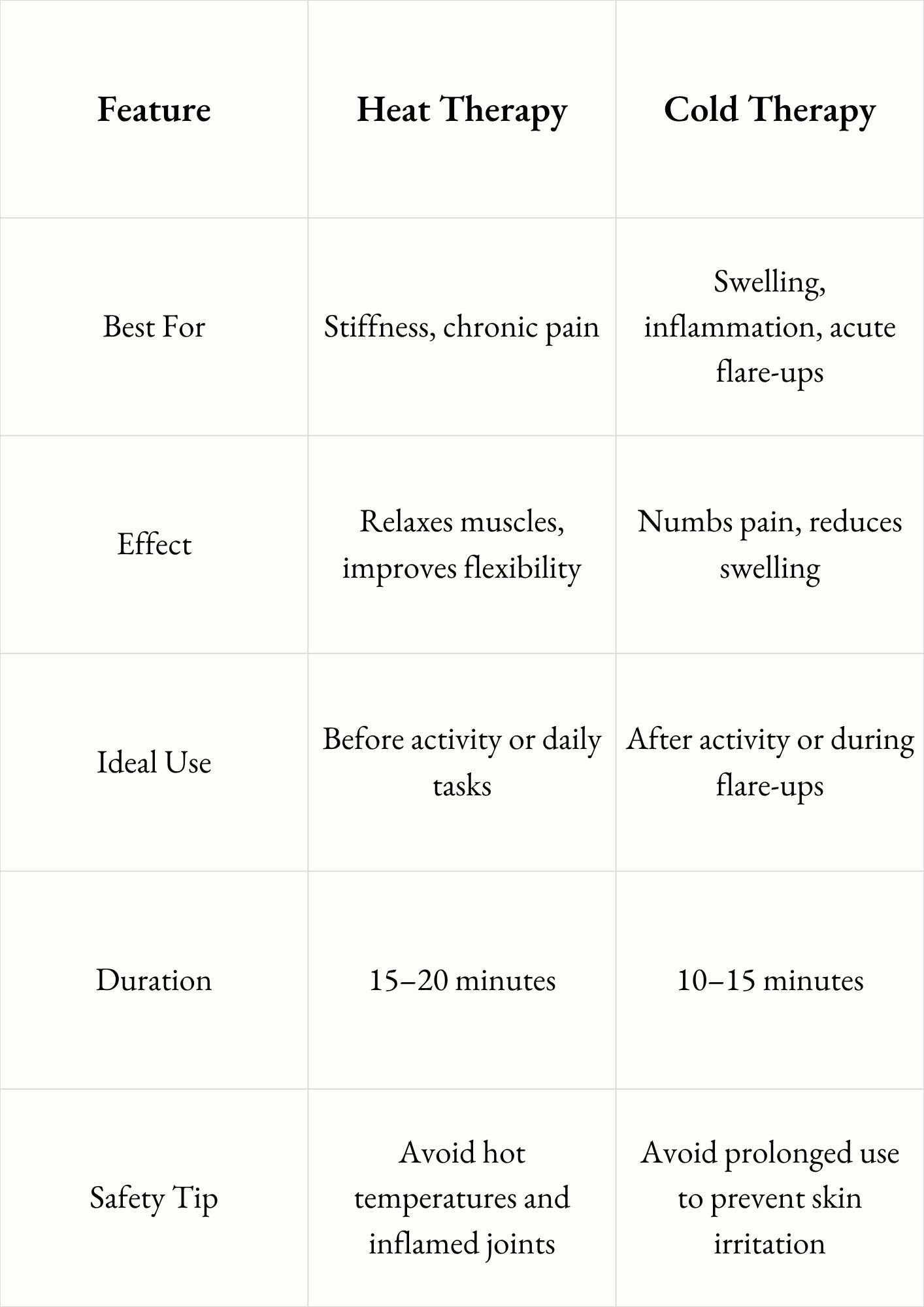
Using heat and cold therapy correctly can improve arthritis pain relief and prevent symptoms from worsening. Heat therapy is best for stiffness and chronic joint pain. It relaxes muscles, improves flexibility, and works well before exercise or daily activities.
Cold therapy is ideal for swelling, inflammation, or sudden flare-ups. It helps numb pain and reduce joint swelling. Many people combine both methods, using heat in the morning or before activity and cold after activity.
Monitoring your body’s response helps ensure maximum relief and safety for patients with arthritis and rheumatoid arthritis.
Difference Between Heat and Cold Therapy
Risks and Side Effects of Heat Therapy
Heat therapy is safe for most arthritis patients, but improper use can cause side effects or worsen certain conditions. Awareness and caution help ensure relief without harm. Risks and side effects:
- Burns from heat that is too hot.
- Skin irritation or redness after prolonged use.
- Worsening swelling or inflammation in already inflamed joints.
- Increased risk for people with poor circulation or diabetes.
- Discomfort from sleeping with electric heating devices.
- Temporary overheating or dizziness with excessive use.
Tips to Get the Best Results from Heat Therapy
Heat therapy works best when used correctly and consistently. Following simple tips can enhance relief, improve joint flexibility, and support daily movement for people with arthritis or rheumatoid arthritis. Tips for best results:
- Use heat therapy regularly, but do not exceed the recommended duration.
- Combine with gentle exercises or stretching to improve mobility.
- Stay hydrated to support circulation during therapy.
- Track which heat methods work best for your body.
- Adjust temperature, duration, and frequency based on comfort.
- Always monitor skin for redness or irritation.
FAQs
What is heat therapy for arthritis?
Heat therapy for arthritis uses warm heat to relax muscles, increase blood flow, and reduce joint stiffness. It helps ease pain and improve movement. Heat can be applied using heating pads, warm towels, hot baths, or warm-water therapy.
How long should I use heat therapy?
Use heat therapy for 15–20 minutes per session. This duration helps relieve stiffness and pain without irritating the skin. Repeat 2–3 times a day if needed, but always monitor your skin for redness or discomfort.
Can heat therapy help rheumatoid arthritis pain?
Yes. Heat therapy can help relieve pain from rheumatoid arthritis by relaxing muscles, improving blood flow, and reducing stiffness. Avoid heat on swollen or inflamed joints, and use it before movement or daily activity for best results.
When should I avoid heat therapy?
Avoid heat therapy on joints that are red, swollen, or inflamed. Do not use heat on broken skin, burns, or areas with poor circulation. Stop immediately if you feel burning, discomfort, or irritation.
Is heat therapy good for arthritis?
Yes, heat therapy is good for arthritis when used correctly. It helps relax stiff muscles, increase blood flow, reduce joint stiffness, and ease chronic pain. It is particularly effective for arthritis and rheumatoid arthritis during daily activities or before gentle exercises.
Read More: Heat Therapy for Period Cramps
Conclusion
Heat therapy for arthritis is a safe and effective way to relieve stiffness, reduce pain, and improve joint mobility. Regular, proper use—including moist, dry, or warm water methods—can support daily activities and comfort. Always follow safety guidelines, monitor your skin, and combine heat therapy with gentle movement for the best results.