
Weighted blankets are designed to provide gentle, evenly distributed pressure across the body. Studies suggest that nearly 60 percent of adults experience sleep problems on at least several nights per week. Because of this, many people ask, how heavy should my weighted blanket be for optimal relaxation?
Experts generally recommend selecting a blanket weighing about 10% of your body weight. Selecting the correct weighted blanket weight ensures comfort, safety, and effective relaxation support. Keep reading to learn more.
What Is a Weighted Blanket?
A weighted blanket is a specially designed blanket filled with glass beads or pellets to provide therapeutic pressure, unlike regular blankets, which mainly provide warmth. The added weight of the weighted blanket creates gentle, evenly distributed pressure across the body, known as deep pressure stimulation. This calming sensation may help reduce stress and improve sleep quality. Understanding the weight of a weighted blanket is essential before deciding how heavy your blanket should be.
Rule of Thumb: How Heavy Should My Weighted Blanket Be?
If you are wondering how heavy should my weighted blanket be, most experts recommend choosing one that weighs about 10 percent of your body weight. This weighted blanket weight provides gentle, evenly distributed pressure that helps reduce stress and promote deeper sleep.
For instance, a person weighing 70 kg would typically use a 7 kg blanket. Some sources suggest a safe range between 5–12 percent of body weight, allowing for personal comfort and sleep style. Always test lighter or slightly heavier options to find the weight that’s most relaxing for your needs.
Weighted Blanket Weight Guide by Age & Size
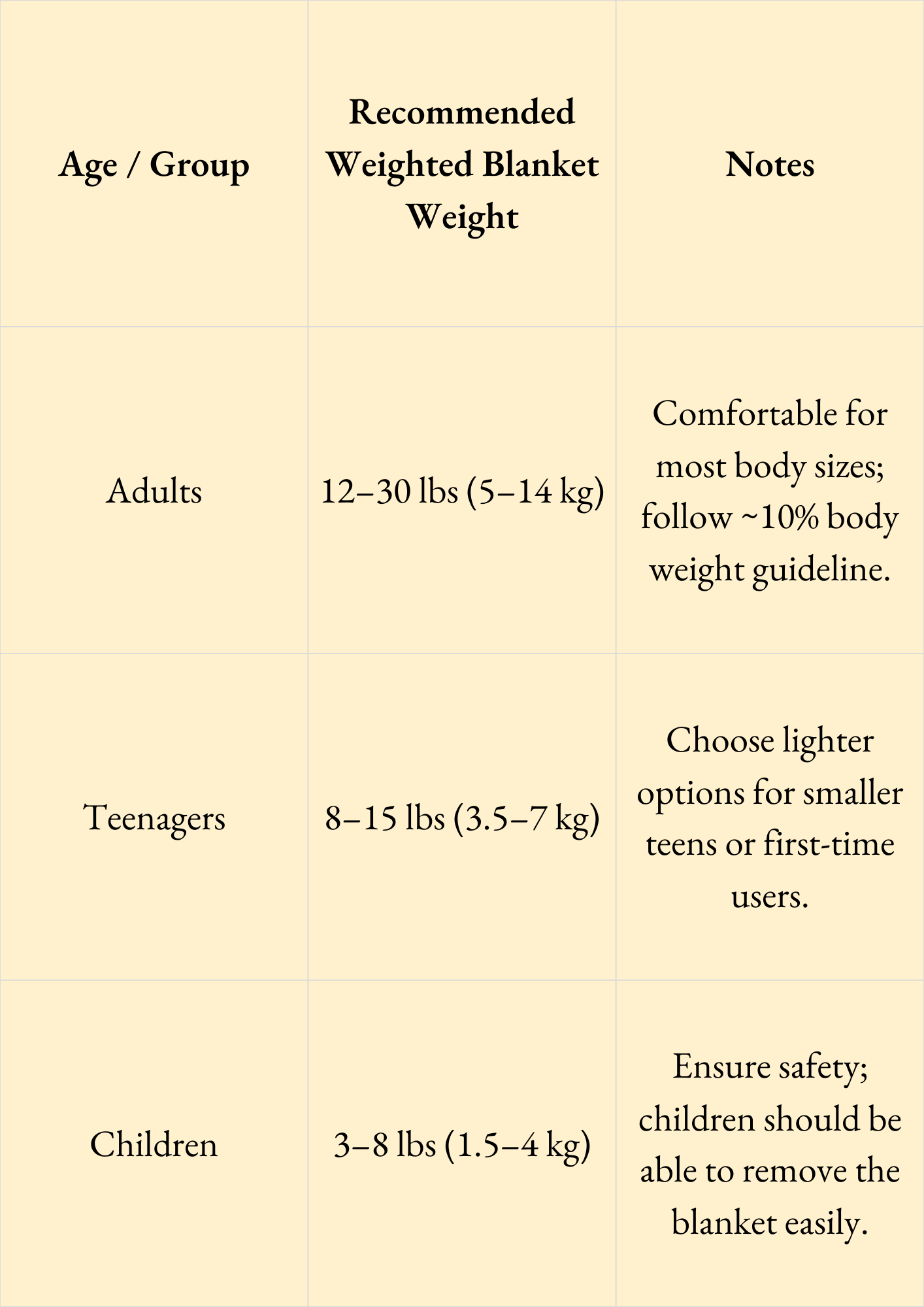
Choosing the correct weighted blanket weight depends on age, body size, and sleep preferences. For most adults, blankets weighing between 12–30 lbs (5–14 kg) provide effective pressure without feeling restrictive.
Teenagers may benefit from slightly lighter options, around 8–15 lbs (3.5–7 kg). For children, a lighter-weight blanket weighing 3–8 lbs (1.5–4 kg) is recommended, to ensure they can move and remove it safely.
Always match the weighted blanket weight to body weight, comfort, and mobility, while following manufacturer and safety guidelines, especially when selecting blankets for kids or individuals with health considerations.
Why Correct Weighted Blanket Weight Matters
Choosing the correct weighted blanket weight is essential to maximize comfort, promote restful sleep, and ensure safety while relaxing.
1. Enhances Sleep Quality
The right weighted blanket weight provides gentle pressure, which can stimulate relaxation hormones like serotonin and melatonin. This promotes deeper, more restful sleep, helping reduce tossing and turning, ultimately improving overall sleep duration and quality for adults and children alike.
2. Reduces Stress and Anxiety
An appropriately weighted blanket delivers deep pressure stimulation, calming the nervous system and lowering cortisol levels. This gentle pressure mimics a comforting hug, helping to reduce stress and anxiety, and creating a soothing environment conducive to relaxation and emotional well-being.
3. Prevents Discomfort or Restriction
Using a blanket that is too heavy can restrict movement or cause discomfort during sleep. Selecting the correct weighted blanket weight ensures freedom of movement, allowing users to feel secure and relaxed without feeling trapped or overly burdened by excess weight.
4. Maximizes Therapeutic Benefits
The ideal weighted blanket weight optimizes calming effects and sensory benefits. By applying proper pressure, it supports the body’s natural relaxation response, providing consistent comfort while enhancing the effectiveness of sleep routines, meditation, or stress-relief practices.
How to Calculate Your Ideal Weighted Blanket Weight
Calculating the right weighted blanket weight is simple and ensures optimal comfort and safety. Most experts recommend using approximately 10% of your body weight as a starting point.
Step 1: Weigh Yourself
Determine your current body weight in pounds or kilograms.
Step 2: Multiply by 0.10
For example, if you weigh 70 kg, 70 × 0.10 = 7 kg. This is a good starting blanket weight.
Step 3: Adjust for Comfort
Some people prefer slightly lighter (8–9%) or slightly heavier (11–12%) blankets, depending on sleep style and personal preference.
Step 4: Consider Age and Health
Children, teens, or individuals with certain medical conditions may require lighter blankets for safety and comfort.
Using this simple method helps you select a weighted blanket weight that is both safe and effective.
Tips for Choosing the Right Weighted Blanket
Selecting the correct weighted blanket weight involves more than just body weight. Follow these tips to ensure comfort, safety, and effectiveness:
- Match Blanket Weight to Body Weight: Start with the 10% guideline and adjust slightly based on personal comfort.
- Consider Blanket Size: Pick a blanket that fits your bed size (single, queen, king) without excessive overhang.
- Try Before Buying: Test different weights in stores or read user reviews for comfort insights.
- Factor in Material and Temperature: Choose breathable fabrics or cooling options if you tend to overheat.
- Check Return Policies: Opt for flexible return policies to exchange blankets if the weight isn’t comfortable.
These tips ensure your weighted blanket weight promotes relaxation, safety, and better sleep.
Safety Considerations
Using the correct weighted blanket weight is essential for safe and effective use. Weighted blankets are generally safe for adults and older children, but extra caution is needed for certain groups.
- Infants and Toddlers: Weighted blankets are not recommended for babies or young children who cannot remove the blanket themselves.
- Medical Conditions: People with respiratory, circulatory, or mobility issues should consult a doctor before using a heavier blanket.
- Supervision for Kids: Children should always be able to move or remove the blanket independently to prevent risk.
FAQs
Q: Can a weighted blanket be too heavy?
Yes, a blanket that exceeds the recommended weighted blanket weight can feel restrictive and uncomfortable. It may interfere with movement or breathing, reducing sleep quality. Always follow the 10% body weight guideline and adjust for personal comfort.
Q: What if I feel trapped under my weighted blanket?
If your blanket feels too heavy or restrictive, consider a lighter option within the safe range. Adjust the weighted blanket weight slightly lower to maintain deep pressure benefits while ensuring comfort and freedom of movement.
Q: Can children use weighted blankets?
Yes, but only children old enough to remove the blanket independently. Select a lighter-weight blanket, weighing 3–8 lbs (1.5–4 kg), and supervise its use to ensure safety and comfort.
Q: How do I know if the blanket is the right weight?
The ideal weight for a weighted blanket should feel comforting without restricting movement. Start with approximately 10% of body weight and adjust based on sleep quality and personal comfort preferences.
Conclusion
Choosing the right weighted blanket weight is essential for comfort, safety, and effective relaxation. Following the 10% body weight guideline, while considering age, size, and personal preference, ensures optimal deep pressure benefits.
The correct weighted blanket weight can reduce stress, improve sleep quality, and promote a calming, restful experience. Always prioritize comfort and safety when selecting a blanket, and adjust weight as needed to find the perfect balance for better sleep every night.